
Dubai Real Estate vs REITs: Which Pays More Income?
Dubai club deals target 8-10% annually versus typical REIT dividends of 3-5%. Compare ticket size, liquidity, control and tax before you commit capital.
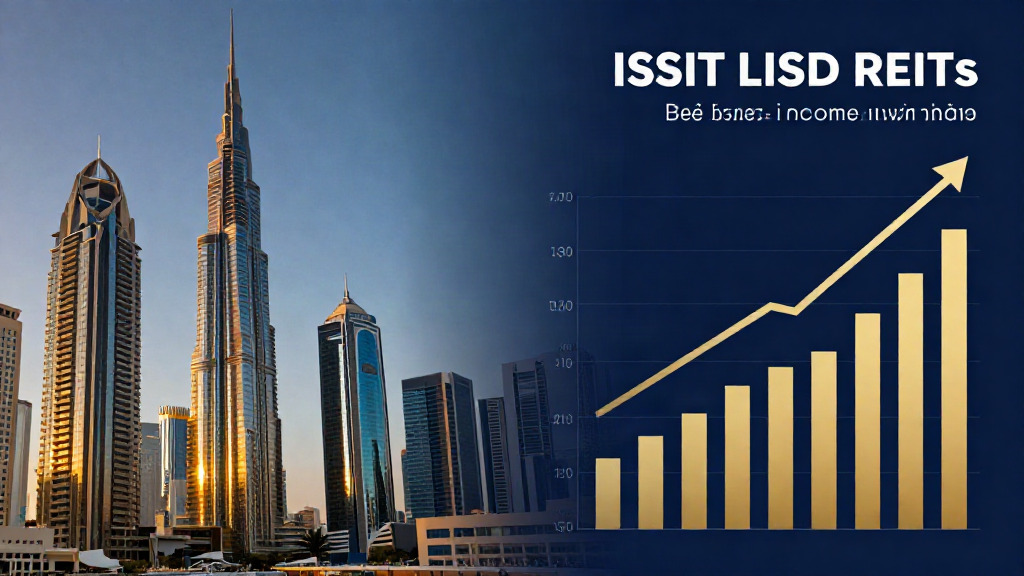
If you want your capital to produce income instead of watching a manager deduct fees from it, you eventually reach the same fork in the road. Dubai real estate vs REITs is the comparison I get asked about more than any other in my inbox. One route hands you a direct, mortgage-secured stake in a specific asset. The other hands you a share certificate in a listed fund. Both call themselves property investing. They are not the same product, and the difference shows up in your bank account every quarter.
What You Are Actually Comparing
A REIT is a company that owns a pool of properties and trades on a stock exchange. You buy shares, you receive whatever dividend the board declares, and the share price floats with the market every single day. A Dubai club deal is the opposite structure: a small group of investors is pooled into one specific property or project, each investor holds a defined economic interest, and the deal is secured by a first-lien mortgage registered in favour of the investors through an independent trustee. On BridgeYields, entry starts from €1,000 per deal, with target terms of 12 to 48 months.
The moment you frame it that way, the real question stops being "which asset class is better" and becomes "which structure does my money actually need".
The Yield Math: 8-10% Target Versus REIT Dividends
This is where the conversation gets honest. Listed REIT dividend yields typically land somewhere in the 3% to 5% range depending on the market, the sector and the cycle. Some trade higher after a selloff, some trade lower after a run-up, but the structural band has been remarkably stable for years. Dubai club deals on the BridgeYields platform target 8-10% annual yield, paid in quarterly coupons over 12 to 48 month terms.
Run that on a €100,000 allocation and the gap is not cosmetic. At a 4% REIT yield you are looking at roughly €4,000 a year before any withholding tax at source. At a 9% target club-deal yield you are looking at roughly €9,000 a year, paid to you quarterly rather than annually. That is more than double the cash flow for the same capital, which is exactly why investors chasing quarterly income stop treating REITs as the automatic default.
One caveat I will always repeat: target yield is a target, not a guarantee. It is secured by a first-lien mortgage and an independent trustee, not by hope, but it is still a projection with a defined term, not a perpetual dividend that resets with the market.
Ticket Size, Liquidity and Control
REITs win on two things, and I will not pretend otherwise. Liquidity is instant: you can sell in seconds during market hours. Diversification is automatic: one share gives you exposure to hundreds of properties, sectors and tenants you will never inspect.
Direct Dubai deals trade those two conveniences for two things REITs cannot offer. The first is a smaller, more precise ticket. You do not need a fund's minimum or a mortgage of your own to start; €1,000 gets you into a defined deal. The second is control over what you own. In a REIT you own a share price, which means you also own the market's mood about interest rates, leverage and sentiment. In a club deal you own a contractual claim on a specific asset with a defined term and a defined coupon. Nobody can talk your position down 15% in an afternoon over a rate headline.
The trade-off is real: your capital is locked for 12 to 48 months. If you might need the money next month, a REIT is the correct answer and no yield difference changes that.
The Tax and Currency Angle for Expats
For the expat and cross-border investors I work with across Europe, the USA and the Middle East, tax treatment often decides the winner before yield is even discussed. UAE property income from these structures is not subject to local property tax or annual capital gains tax in the way most European investors are used to, which keeps more of the gross coupon in your pocket. REIT dividends, by contrast, are frequently taxed at source in the fund's jurisdiction, so the headline yield you see is rarely the yield that lands in your account.
This is the part most investors discover too late. Model net income, not gross, and the comparison shifts further in favour of direct, transparent structures.
Where REITs Still Genuinely Win
I am not here to sell you a REIT story or a club-deal story. I am here to make sure you are not confusing two different tools. Choose REITs if you need daily liquidity, want effortless diversification, and are comfortable with your income moving with the market. Choose a Dubai club deal if you want a higher, contractual target yield, quarterly cash flow, a smaller entry ticket and a defined exit, and you can genuinely leave the capital parked for the term.
Which Structure Fits You
Ask three questions before you commit a single euro. How soon might I need this money back? Do I need income now, quarterly, or am I happy with an annual dividend that fluctuates? And do I want to own a specific, secured asset, or a liquid share in a fund?
If your answers point to income today, a defined term and a secured position, the club-deal structure is built for exactly that. If they point to flexibility and hands-off diversification, a listed REIT is the more rational choice. There is no shame in either answer. There is only the cost of picking the wrong one.
The Bottom Line
Dubai real estate vs REITs is not a fight about which asset class is superior. It is a decision about what you want your capital to do. REITs give you liquidity and a dividend that moves with the market. Dubai club deals give you a higher target yield of 8-10%, quarterly coupons, investments from €1,000 and a first-lien, trustee-secured claim on a specific asset over a defined term.
Before you hand your money to any structure, verify the numbers yourself. I keep 15 free financial calculators on my site so you can model compound growth, retirement projections and safe withdrawal rates in your browser, with no sign-up. Investor, before advisor. Run the math, then decide who deserves your capital.